
Playground Turf Installation in the Inland Empire
Create a safer, softer, and cleaner play environment with engineered playground turf systems designed to reduce impact, improve drainage, and protect children during everyday play. Built for schools, parks, HOAs, and residential play areas.
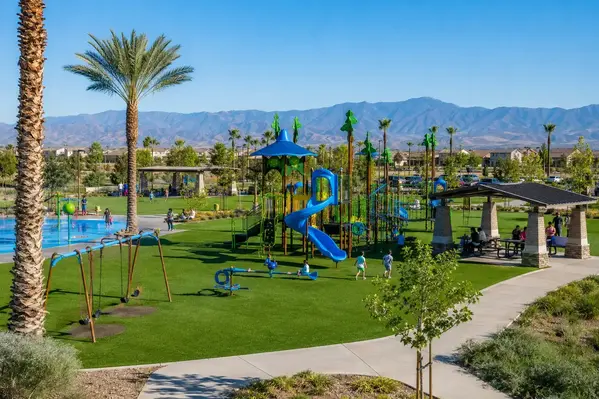
Why Playground Turf Is Replacing Traditional Playground Surfaces
Playground turf provides a safer and more predictable alternative to wood chips, gravel, and bare soil by creating a cushioned, impact‑absorbing surface designed for active play. Loose‑fill materials shift, scatter, and compact over time, which reduces their ability to protect children from falls. A properly engineered turf system maintains consistent shock absorption across the entire play area, giving parents, schools, and HOAs confidence in long‑term safety.
Unlike wood chips or gravel, turf systems stay in place and do not migrate outside the play zone. This eliminates the constant raking, refilling, and leveling required to keep loose‑fill surfaces compliant. Turf also prevents tripping hazards, uneven surfaces, and the bare spots that form when children repeatedly run, slide, or jump in the same areas. The result is a cleaner, more durable playground surface that performs reliably day after day.
Drainage‑engineered bases keep the surface dry and usable after rain or water play, preventing mud, erosion, and unsafe conditions. Traditional surfaces often become saturated, muddy, or compacted, making them unusable for hours or even days. Modern playground turf systems installed throughout the Inland Empire are designed to drain quickly, resist bacteria growth, and maintain a stable, ADA‑accessible surface that supports safe play in every season.
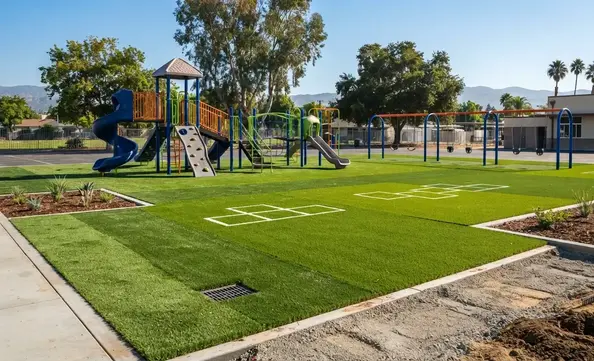
Upgrading to engineered playground turf eliminates mud, erosion, and uneven surfaces while creating a safer and more usable play environment year-round.
Choosing the Right Playground Turf for Different Age Groups
Designing a safe, age‑appropriate playground surface is not guesswork. It is a technical process rooted in impact‑attenuation science, ASTM safety standards, and a deep understanding of how children interact with their environment. A toddler’s backyard play zone in Rancho Cucamonga has completely different fall‑protection needs than a high‑traffic elementary school playground in Riverside or a community park in Eastvale with multi‑level climbing structures. The right turf system is never one size fits all. It is engineered specifically for the children who will use it.
For infants and toddlers, the priority is gentle, forgiving surfaces that support early motor development. These areas typically feature lower equipment heights, open play zones, and soft padding that cushions inevitable tumbles. As children grow, their play becomes more dynamic. Elementary‑age playgrounds require expanded safety zones around monkey bars, slides, and climbing towers, often with higher fall‑height ratings and reinforced shock pads designed to maintain performance even under daily recess traffic. HOA and municipal playgrounds across the Inland Empire face a different challenge. These spaces demand turf systems that resist compression, drain efficiently after irrigation or rain, and maintain consistent impact protection even after thousands of footfalls.
Our design process begins with a full site assessment that includes equipment height, user age group, traffic patterns, soil composition, drainage behavior, and the unique microclimate of your location. A shaded playground in Redlands performs differently than a sun‑exposed one in Temecula, and we engineer accordingly. We then specify the correct shock‑pad thickness, base construction, and turf product to meet or exceed ASTM F1292 and ADA accessibility requirements. The result is a playground surface that stays safe, clean, and comfortable year‑round while reducing maintenance burdens for schools, HOAs, and homeowners.
When you choose a professionally engineered playground turf system, you are not just installing synthetic grass. You are investing in long‑term safety, predictable performance, and peace of mind. Every square foot is built to protect the children who use it today and the ones who will use it years from now.
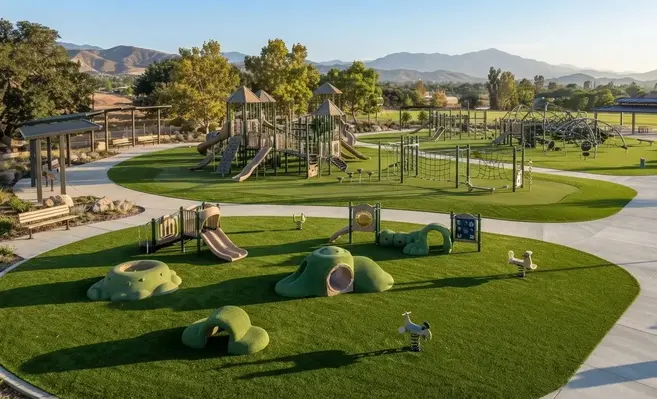
Every playground should be engineered around the children who use it. Separate age-specific play zones, properly designed fall areas, and professionally installed playground turf help create safer, longer-lasting environments for families, schools, parks, and HOA communities.
Engineered for Impact Absorption and Safety
Playground safety is never determined by turf alone. It comes from the engineered system beneath the surface, the shock pads, the base materials, the grading, and the way each component works together to protect children during falls, jumps, and high‑energy play. Across the Inland Empire, schools, HOAs, churches, and childcare centers rely on professionally engineered turf systems to meet strict ASTM impact standards and reduce long‑term liability.
These are the core safety principles that make modern playground turf a dependable choice for high‑traffic play environments:
-
Shock Pads Matched to Fall Heights
Every piece of playground equipment has a required fall height rating. Shock pads are selected and installed based on those measurements, ensuring consistent cushioning beneath swings, slides, climbers, and jungle gyms. Inland Empire schools often upgrade older playgrounds with modern pads to meet current ASTM standards and reduce injury risk. -
Consistent Impact Performance
Loose-fill materials like wood chips shift, scatter, and compact over time, creating uneven protection. Engineered turf systems maintain predictable impact absorption across the entire play area, even under heavy daily use. This reliability is especially important for campuses in Riverside, Fontana, and Eastvale with high student traffic. -
Precision-Graded Base Construction
The base beneath the turf determines how well the system absorbs impact. Proper grading ensures the shock pad sits level, eliminating hard spots and uneven areas. Inland Empire soil conditions vary widely, so professional grading is essential for long-term safety and stability. -
Reinforced Zones for High-Use Equipment
Areas beneath swings, monkey bars, and climbing structures experience the most force. Engineered turf systems reinforce these zones with additional padding and durable fibers, ensuring children land on a soft, stable surface every time. -
Drainage That Protects Impact Performance
Standing water weakens adhesives, creates slippery conditions, and reduces shock pad effectiveness. Permeable turf backing and engineered aggregate bases move water quickly through the system, keeping the surface dry, firm, and safe — even after irrigation or storms. -
UV-Stabilized Fibers for Long-Term Reliability
Inland Empire summers bring intense heat and high UV exposure. Playground turf uses UV-stabilized fibers that resist fading, brittleness, and performance loss. This ensures the turf maintains its cushioning and appearance for many years, even under harsh sunlight. -
ADA-Compliant Surface Stability
Engineered turf provides a smooth, stable surface that supports wheelchair access, mobility devices, and inclusive play. Unlike loose-fill materials, turf does not shift or create uneven terrain that limits accessibility. -
Professional Installation Standards
The difference between a safe playground and a risky one often comes down to installation quality. Proper seam work, accurate grading, correct pad thickness, and secure edging ensure the system performs as designed. Inland Empire schools that invest in professional installation see significantly better safety outcomes and longer system lifespan.
Impact absorption is engineered, not guessed. By combining shock pads, precision grading, UV-stabilized fibers, and efficient drainage, modern playground turf delivers reliable safety that meets ASTM and ADA standards. Whether you are building a new playground or upgrading an existing one, choosing a professionally engineered turf system ensures children can play, explore, and learn with confidence.
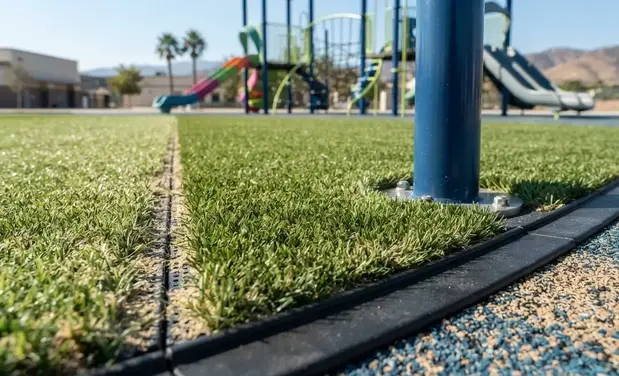
Safety in playground turf comes from precision installation details, tight seams, stable base preparation, and consistent surface quality across every high-impact zone.
Why Proper Drainage Matters Beneath Playground Turf
Water management is one of the most overlooked parts of playground construction in the Inland Empire. Schools, HOAs, and childcare centers in Riverside, San Bernardino, Rancho Cucamonga, Ontario, Corona, and surrounding communities often deal with heavy irrigation cycles, splash play areas, and occasional storms. Without proper drainage, water becomes trapped beneath the turf, creating soft spots, odors, bacteria growth, and unstable footing that can shorten the lifespan of the entire system.
Permeable Turf Backing
Modern playground turf uses a permeable backing that allows water to pass through quickly rather than sitting on the surface. This prevents puddles, reduces slip hazards, and helps the turf dry faster after rain or irrigation. It is especially important for Inland Empire campuses with high water usage or splash features.
Engineered Aggregate Base
The base beneath the turf is just as important as the turf itself. A properly compacted, multi‑layer aggregate base moves water downward and outward, preventing saturation and erosion. Schools in areas with clay-heavy soils, such as Fontana and Eastvale, benefit significantly from engineered bases that improve drainage performance.
Correct Grading & Slope
Even the best turf system fails without proper grading. Playgrounds must be shaped to direct water away from equipment, walkways, and high‑traffic zones. Correct slope ensures water flows naturally through the system instead of pooling beneath the surface, which is a common issue in older Inland Empire playgrounds.
Stable, Safe Footing
Poor drainage leads to soft, spongy areas that feel unstable underfoot. This is especially dangerous beneath swings, slides, and climbing structures where children land with more force. Proper drainage keeps the surface firm, predictable, and safe for everyday use.
Long-Term System Protection
Water trapped beneath turf accelerates wear, damages adhesives, and causes bacteria buildup. By moving water efficiently through the system, drainage protects the turf backing, shock pads, and base materials. This dramatically extends the lifespan of the playground and reduces long-term maintenance costs for Inland Empire facilities.
Compatibility With Shock Pads
Shock pads improve fall protection, but they must be paired with proper drainage. High-quality pads include vertical and horizontal channels that help water move through the system. Without correct installation, water can become trapped above or below the pad, reducing performance and creating safety issues.
Proper drainage is essential for any Inland Empire playground turf installation. By combining permeable turf backing, engineered aggregate bases, correct grading, and compatible shock pads, your playground stays cleaner, safer, and more durable year-round. A professional site evaluation ensures your project receives the right drainage system for local soil conditions and daily usage, protecting your investment for many years to come.
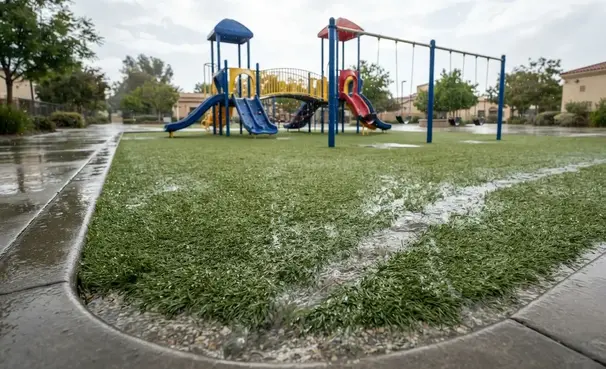
Properly engineered playground turf systems allow water to drain quickly through the surface, preventing puddles, mud, and unsafe play conditions after rain or irrigation.
Playground Safety Standards Every Turf System Should Meet
A safe playground surface is never created by accident. Professional playground turf must be engineered to reduce injury risk, support accessibility, and perform consistently under daily use. The most reliable systems are built around nationally recognized safety standards that guide impact absorption, mobility access, and long term performance.
ASTM F1292 Impact Attenuation
ASTM F1292 measures how well a surface absorbs impact beneath playground equipment. This standard determines the required shock pad thickness and base construction for swings, slides, climbing towers, and elevated structures. Meeting this rating helps reduce the severity of fall‑related injuries.
ASTM F1951 Accessibility Compliance
ASTM F1951 evaluates how easily wheelchairs and mobility devices can move across the surface. Turf systems must provide stable, low‑resistance pathways so children and adults with mobility challenges can access every part of the playground safely and independently.
ADA Accessible Routes & Play Areas
ADA guidelines require smooth, continuous routes that connect entrances, equipment zones, and seating areas. Proper turf installation ensures these routes remain level, firm, and usable year round, even after heavy foot traffic or weather changes.
Shock Pad Engineering for Fall Zones
High‑impact zones beneath swings, slides, and climbing equipment require engineered shock pads. These pads help meet fall height requirements while keeping the surface visually seamless and comfortable for everyday play.
Proper Base Construction & Grading
Safety starts below the turf. Professional grading, compaction, and soil stabilization prevent dips, wrinkles, and trip hazards while ensuring water drains correctly through the system.
Drainage Performance & Water Management
Standing water creates slip hazards and accelerates turf wear. Engineered drainage bases move water quickly through the system, keeping the playground usable after storms, irrigation, or water play.
Consistent Safety Across the Entire Surface
Loose‑fill materials shift and create uneven protection. Turf systems maintain uniform impact absorption across every square foot, ensuring predictable safety no matter where children land or play.
Age‑Appropriate Safety Planning
Toddlers, elementary‑age children, and teens all interact with playgrounds differently. Safety zones, fall heights, and turf density are selected based on the age group using the space, ensuring proper protection for every stage of childhood.
Compliance for Schools, HOAs & Municipalities
Public and commercial playgrounds must meet stricter safety requirements. We design systems that satisfy school district guidelines, HOA standards, and municipal safety expectations throughout the Inland Empire.
Documentation & Verification
Professional installations include documentation showing fall height ratings, drainage specifications, and accessibility compliance. This gives property managers, administrators, and parents confidence that the playground meets recognized safety benchmarks.
Designing around proven safety standards ensures your playground turf performs reliably, protects children, and remains accessible for every visitor. If you want a playground that meets ASTM and ADA guidelines and stays safe year after year, our engineered turf systems deliver the performance your property deserves.
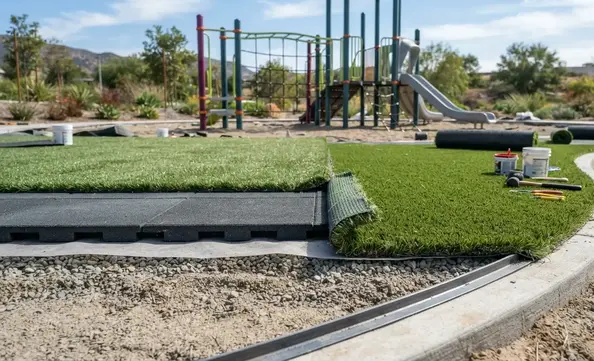
Safe playground turf systems rely on engineered foundations, impact protection layers, drainage design, and installation methods built around recognized safety standards.
Choosing the Right Fall Height Protection
Fall height protection is one of the most important safety decisions in any playground design. The correct system depends on the height of the equipment, the age group using the space, and the expected traffic levels. A backyard swing set in Rancho Cucamonga does not require the same engineering as a commercial climbing tower in Riverside or a municipal playground in San Bernardino. Understanding how fall height ratings work ensures your playground is safe, compliant, and built to last.
- Fall height is measured from the highest accessible point The measurement is taken from the tallest surface a child can stand, climb, or sit on. This determines the minimum impact attenuation required beneath that specific piece of equipment.
- Shock pad thickness must match equipment height Taller structures require thicker shock pads to meet ASTM F1292 impact standards. Using the wrong pad thickness can lead to unsafe fall zones or unnecessary overspending.
- Different zones require different protection levels High‑impact areas beneath swings, slides, and climbing towers need enhanced cushioning. Low‑impact areas can use standard turf systems, reducing cost without compromising safety.
- Base construction determines long‑term performance A properly compacted aggregate base prevents shifting, settling, and uneven surfaces. Without a stable foundation, even premium turf and shock pads cannot perform correctly.
- Age groups influence fall height requirements Toddlers need lower fall heights and softer surfaces. Older children often use taller equipment that requires more advanced impact protection. Designing around age ensures proper safety.
- Commercial playgrounds require higher safety ratings Schools, HOAs, churches, and municipal parks must meet stricter standards. These environments often require thicker pads, reinforced bases, and documented compliance.
- Local soil and climate affect fall zone engineering Inland Empire clay soils, heat exposure, and drainage patterns influence how shock pads and bases perform. Systems must be engineered for local conditions to stay safe year‑round.
- ASTM compliance provides measurable safety assurance ASTM F1292 testing verifies that the turf system can absorb impact from the equipment installed above it. This gives parents, administrators, and inspectors confidence in long‑term safety.
- Proper fall height planning prevents overbuilding Oversized shock pads and unnecessary upgrades increase cost without improving safety. Correct engineering ensures you pay only for the protection your equipment actually requires.
Choosing the right fall height protection ensures your playground is safe, compliant, and built to last. If you want a system engineered specifically for your equipment, your property, and Inland Empire conditions, professional fall zone design eliminates guesswork and delivers long‑term peace of mind.
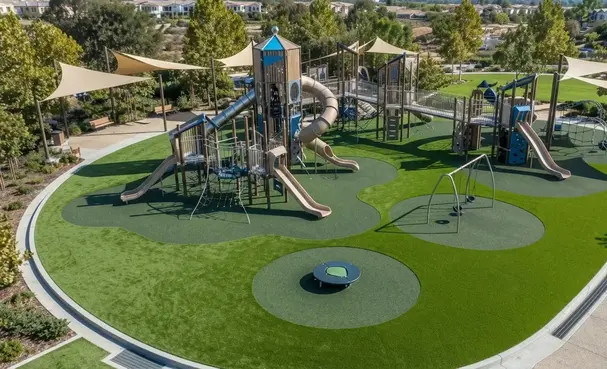
Proper fall height protection combines equipment evaluation, impact-absorbing materials, and engineered turf systems designed for predictable safety performance.
Common Playground Problems Artificial Turf Solves
Many playgrounds begin with good intentions but quickly become difficult to maintain. Grass wears away under swings, mulch scatters across sidewalks, dirt turns into mud after rain, and uneven ground creates trip hazards. These issues increase maintenance demands and can also affect overall playground safety. In high‑use areas throughout the Inland Empire, these problems appear faster due to heat, dry soil conditions, and heavy daily foot traffic.
Engineered playground turf eliminates many of these common problems by creating a stable, uniform surface that stays in place throughout the year. Proper drainage allows water to move through the system quickly, reducing puddles and muddy conditions while helping the playground reopen sooner after storms or irrigation. Turf systems also prevent surface displacement, erosion, and the bare spots that form when children repeatedly run or land in the same areas.
- Eliminates muddy play areas
- Stops mulch and wood chips from spreading
- Reduces dust during dry Inland Empire summers
- Creates consistent footing across the entire playground
- Minimizes erosion beneath swings and slides
- Keeps playgrounds looking clean year‑round
How Playground Turf Performs During Inland Empire Summers
Inland Empire summers bring intense heat, high UV exposure, and long stretches of dry weather. Because playground surfaces are used daily, even during peak temperatures, choosing materials that stay comfortable and safe is essential. Modern playground turf systems are engineered to perform better than concrete, asphalt, or poured rubber when exposed to direct sunlight.
- Heat‑Conscious Turf Fibers: UV‑stabilized fibers help reduce surface temperature and resist fading, keeping the turf cooler and more comfortable during peak summer heat.
- Permeable Backing for Cooling: Turf construction allows water to pass through quickly, making light rinsing an effective way to cool the surface during hot afternoons.
- Shade Integration: Shade sails, trees, and covered play structures dramatically reduce heat buildup, creating cooler zones where children can play safely.
- Airflow Beneath the Turf: Modern turf systems promote air movement through the backing, helping dissipate heat more effectively than solid rubber or asphalt.
- Landscape Cooling Effects: Surrounding planter beds, grass areas, and natural shade elements help reduce reflected heat and improve overall comfort across the playground.
- Routine Water Cooling: Quick misting or irrigation cycles can rapidly lower surface temperatures, making turf more comfortable for barefoot or seated play.
- Specialized Infill Options: Certain infills are designed to stay cooler under direct sunlight, reducing heat retention and improving comfort compared to rubber infill.
- Better Performance Than Hardscape: Concrete and asphalt can reach extreme temperatures. Turf provides a softer, cooler alternative that supports safe summer activity.
- Safer Surface Temperatures: Engineered turf reduces the risk of burns and discomfort, especially for younger children who play barefoot or sit directly on the surface.
- Drought‑Resistant Performance: Turf maintains its appearance and usability during prolonged dry periods, eliminating the irrigation demands of natural grass.
- Resilience Under Extreme UV Exposure: Inland Empire sunlight is intense, but premium turf materials are built to withstand long-term exposure without degrading or losing color.
- Engineered for Inland Empire Climate: With UV‑resistant fibers, permeable backing, and heat‑conscious design, modern playground turf delivers reliable comfort throughout the hottest months of the year.
These features allow playground turf to remain safe, comfortable, and visually appealing even during the Inland Empire’s hottest summer days. When combined with thoughtful shade placement and routine cooling, turf becomes one of the most reliable warm‑weather surfacing options for schools and community play spaces.
Playground Turf Installation Process
A safe and long lasting playground turf system is built through a precise, engineered installation sequence. Each step influences safety, drainage, durability, and compliance with ASTM and ADA standards. Inland Empire schools, HOAs, churches, and childcare centers rely on professional installation because local soil conditions, high foot traffic, and intense summer heat require a properly built foundation.
1. Site Layout and Safety Planning
The process begins with mapping fall zones, equipment spacing, ADA routes, and drainage paths. This ensures the turf system matches the exact needs of the playground and meets all required safety standards. Proper planning prevents gaps in fall protection and eliminates future layout conflicts.
2. Excavation
Old surfacing, unstable soil, and organic material are removed to create a clean subgrade. Inland Empire clay and hardpan layers often require deeper excavation to prevent shifting, drainage issues, and uneven surfaces. A stable base starts with proper soil removal.
3. Base Construction
A compacted aggregate base is installed to create stability and promote drainage. This layer prevents soft spots, eliminates erosion, and supports consistent impact absorption across the entire play area. A well built base is essential for long term performance. Learn more about our engineered turf drainage and foundation systems.
4. Shock Pad Installation
If required by fall height ratings, an impact absorbing pad is added beneath the turf. Shock pads are selected based on equipment height and ensure the playground meets ASTM safety standards. This step is critical for protecting children during falls and high energy play.
5. Turf Installation
Turf is cut, shaped, seamed, and secured to fit the playground layout. Professional seam work and edging prevent lifting, tripping hazards, and premature wear, especially in high traffic zones. The final surface must be smooth, secure, and visually consistent.
6. Final Grooming and Inspection
The surface is brushed, infill is leveled, and all seams, edges, and fall zones are inspected. Drainage, safety compliance, and overall consistency are verified before the playground is opened for use. This final check ensures the system performs exactly as designed.
A professionally installed playground turf system provides safer landings, better drainage, and long term durability for Inland Empire communities. Each step in the process is essential for creating a surface that performs reliably under daily use and meets all required safety standards.
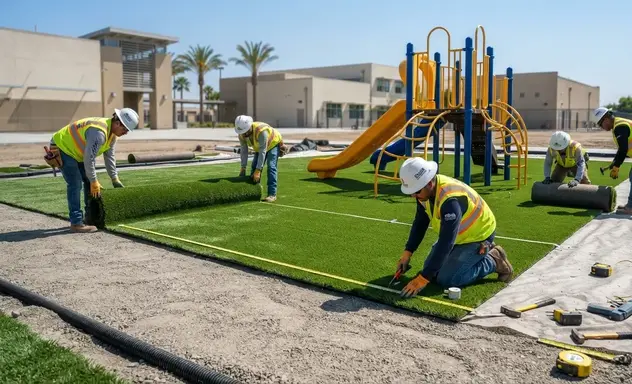
Professional installation is what determines long-term safety and performance. Proper grading, base preparation, and seam work ensure the system performs exactly as engineered.
Planning a Playground Turf Installation the Right Way
Successful playground projects begin long before excavation starts. Whether you're building a backyard play area with our residential artificial turf installation, upgrading a school playground, renovating an HOA park, or designing a new community recreation space, thoughtful planning ensures your artificial turf system performs safely and reliably for many years. Every Inland Empire property presents unique grading, drainage, and safety considerations that should be addressed before installation begins.
Evaluate Existing Site Conditions
Every playground begins with understanding the site itself. Existing grades, drainage patterns, irrigation systems, tree roots, utility lines, soil composition, and equipment placement all influence how the turf system should be engineered. Inland Empire clay soils often require additional excavation and drainage improvements to create a stable foundation.
Plan Safety Before Appearance
Beautiful playgrounds are important, but safety always comes first. Fall heights, equipment spacing, shock pad thickness, ADA accessibility, and circulation paths should all be designed before selecting turf colors or decorative features. A properly engineered system protects children while maintaining a clean, professional appearance.
Design Drainage Into the Project
Standing water is one of the leading causes of premature playground failure. Proper grading, permeable aggregate bases, and engineered drainage allow water to move quickly beneath the turf, helping eliminate puddles, mud, erosion, and extended downtime after rain or irrigation.
Consider Daily Traffic Levels
Residential playsets experience different wear than elementary schools or municipal parks. Estimating expected traffic helps determine the proper turf product, infill, base depth, and shock pad system needed for long-term durability.
Plan Around Shade & Landscaping
Mature trees, surrounding landscaping, fencing, retaining walls, and future landscape improvements should all be considered before installation. Planning these transitions early creates cleaner finished edges and reduces future modifications.
Think About Future Growth
Many playgrounds evolve over time. Schools expand equipment, HOAs renovate amenities, and families upgrade backyard play areas as children grow. Planning for future additions during the initial installation often saves significant labor and expense later.
Proper planning creates a playground that is safer, drains better, requires less maintenance, and provides years of dependable performance. Every successful playground turf installation begins with engineering the site, not simply installing synthetic grass.
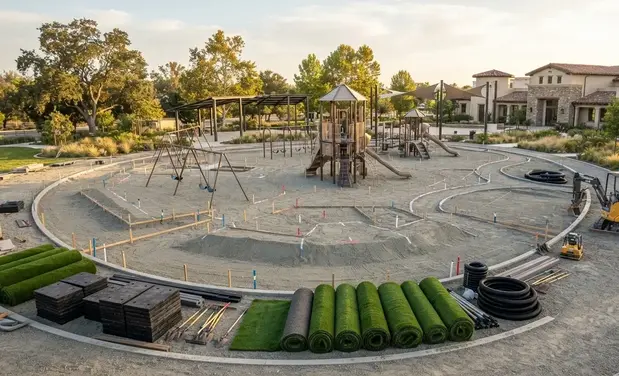
Every successful playground begins with careful planning, evaluating grading, drainage, safety zones, equipment placement, and long-term performance before installation begins.
Planning a Playground Project?
Every successful playground begins with proper planning. We evaluate grading, drainage, equipment layout, safety requirements, and long-term durability before installation so your playground performs exactly as it should.
Schedule Your Free Playground ConsultationHow Shock Pads Work Beneath Playground Turf
Shock pads are specialized foam or rubber underlayments engineered to sit directly beneath artificial playground turf. Their primary purpose is to enhance impact absorption, creating a safer, more forgiving surface for children at play. Rather than relying solely on turf fibers for cushioning, the shock pad disperses impact energy across a wider area, significantly reducing the force felt during a fall.
These pads come in various thicknesses and densities, each designed to meet specific safety requirements. Factors such as equipment height, expected foot traffic, and targeted fall protection ratings (like critical fall height compliance) determine which pad system is most appropriate. A thicker or more resilient pad can dramatically improve shock attenuation, especially beneath high‑impact zones like slides or climbing structures.
Proper installation is essential. Modern shock pads incorporate built‑in drainage channels that allow water to move freely through the system, preventing moisture from becoming trapped beneath the turf. This ensures the surface dries quickly after rain, maintains consistent performance, and avoids issues like mold or premature material breakdown.
When installed correctly, the combination of turf and shock pad creates a long‑lasting, uniform cushioning layer that stays resilient even after years of active play. The result is a playground surface that feels softer underfoot, reduces injury risk, and supports a safer, more enjoyable play environment for children of all ages.
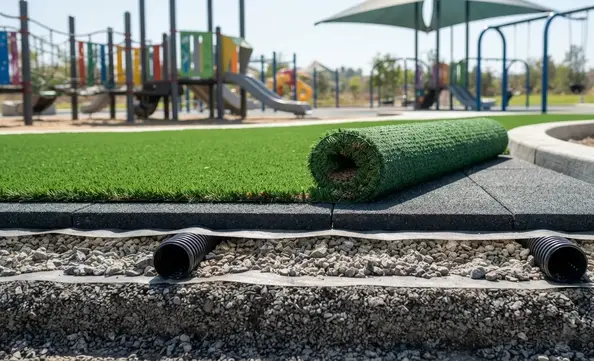
Hidden beneath every premium playground turf system is an engineered shock pad designed to improve fall protection, drainage, and long-term safety performance.
Not Sure What Shock Pad Your Playground Needs?
Shock pad thickness depends on equipment height, fall-zone requirements, traffic levels, and ASTM safety standards. We'll recommend the right system for your playground so you get the protection you need without paying for unnecessary upgrades.
Talk With a Playground Turf SpecialistResidential vs Commercial Playground Turf Installation
Although both systems use synthetic grass, residential playground turf and commercial playground surfacing are engineered with very different performance expectations. Backyard installations often prioritize comfort, appearance, and moderate daily use, while schools, parks, daycare centers, and HOA playgrounds throughout the Inland Empire require systems capable of handling significantly heavier foot traffic and more demanding safety requirements.
Commercial turf installations frequently include thicker aggregate bases, higher performance shock pads, reinforced seams, and larger drainage capacities to accommodate thousands of users throughout the year. These systems are designed to maintain consistent impact protection even after repeated high‑energy play, recess cycles, and seasonal weather changes. Residential projects typically emphasize creating a safe, clean environment for children while blending naturally with the surrounding landscape and providing a softer, more comfortable feel underfoot.
Selecting the correct system ensures the playground performs properly, lasts longer, and continues providing dependable impact protection throughout its service life. Whether you are building a backyard play zone in Rancho Cucamonga or upgrading a commercial playground in Riverside, choosing the right turf system is essential for long‑term safety, durability, and peace of mind.
Playground Turf for Inland Empire Schools
Inland Empire schools are upgrading aging playground surfaces with engineered turf systems that improve safety, reduce maintenance, and create cleaner outdoor environments for students.
Designed for High‑Traffic Campuses
Schools in Riverside, Ontario, Rancho Cucamonga, Redlands, Corona, and San Bernardino County need surfaces that withstand heavy daily use. Engineered turf provides reliable performance where traditional materials quickly break down.
Durable Under Daily Student Activity
Recess, PE classes, and after‑school programs create intense wear patterns. Turf prevents bare dirt, mud, and uneven surfaces while eliminating constant raking and replenishing of loose-fill materials.
Stable, Consistent Play Surface
Installed over a compacted aggregate base, playground turf stays level and attractive for years, reducing erosion repairs and eliminating the maintenance challenges of grass or mulch.
Engineered Fall Protection
Shock pads and properly compacted base materials help meet ASTM fall‑height standards and ADA accessibility goals, ensuring predictable cushioning across the entire playground.
UV‑Resistant for Inland Empire Heat
Cities like Riverside, Fontana, and Moreno Valley experience intense sun and prolonged heat. UV‑stabilized turf fibers resist fading and wear far better than natural grass or dried‑out mulch.
Efficient Drainage & Faster Drying
Permeable backing and engineered base layers allow water to move quickly through the surface, reducing puddles, minimizing erosion, and keeping playgrounds usable after storms or irrigation cycles.
Cleaner Classrooms & Hallways
Students no longer track mud, wood chips, grass clippings, or dust indoors. Campuses stay cleaner, custodial teams save time, and outdoor areas maintain a professional appearance year‑round.
Educational Turf Inlays
Schools can integrate hopscotch courts, alphabet paths, number grids, sensory trails, and fitness stations directly into the turf, supporting outdoor learning and active play.
Lower Long‑Term Maintenance Costs
Eliminating mowing, irrigation, fertilization, mulch replacement, and erosion repairs frees maintenance staff to focus on other priorities while improving campus appearance.
Engineered for Long‑Term Performance
Proper excavation, grading, drainage planning, and base construction ensure the turf system performs reliably for years rather than simply improving aesthetics.
Supports Safer Outdoor Learning
Engineered turf provides dependable drainage, impact protection, and durability, creating outdoor spaces where students can safely learn, explore, and play throughout the school year.
Professional Installation Standards
High‑quality materials, secure edges, precise grading, and thoughtful integration with surrounding hardscape ensure a playground surface built for safety, longevity, and everyday reliability.
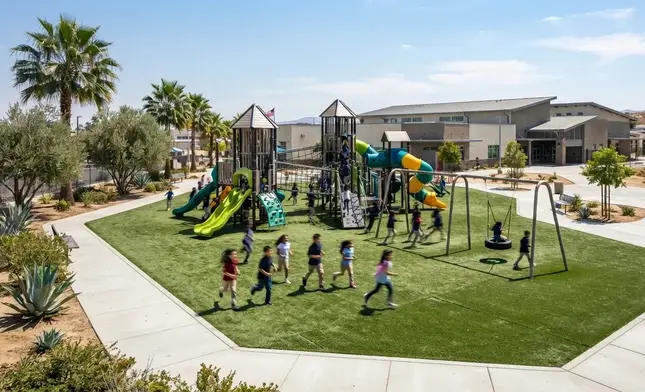
Schools across the Inland Empire are upgrading to engineered turf systems that improve safety, reduce maintenance, and handle high daily student traffic.
Planning a School Playground Upgrade?
Whether you're replacing aging mulch, renovating an existing playground, or building a new campus play area, we'll design a playground turf system engineered for student safety, ASTM compliance, fast drainage, and long-term durability.
Playground Turf We Install Throughout the Inland Empire
Every playground has different safety requirements, traffic levels, drainage challenges, and design goals. We install custom engineered playground turf systems for residential properties, schools, commercial facilities, and public spaces throughout Riverside County, San Bernardino County, and surrounding Inland Empire communities. Every project is designed with proper grading, impact absorption, drainage, and long term durability in mind.
Residential Backyard Playgrounds
Safe backyard play areas with cushioned residential artificial turf that eliminates mud, dead grass, and uneven surfaces. Ideal beneath swing sets, playhouses, jungle gyms, and climbing structures.
School Playground Turf
Durable playground turf engineered for elementary schools, middle schools, and educational campuses. Built to withstand heavy recess traffic while maintaining consistent impact protection throughout the school year.
Church Playground Turf
Clean, safe outdoor play environments for churches, ministries, and children's activity areas. Low maintenance turf reduces landscaping costs and creates dependable spaces for families.
HOA Community Playgrounds
Attractive, durable playground surfaces for homeowners associations that improve community amenities while minimizing irrigation, maintenance, and landscape upkeep.
Apartment & Multifamily Play Areas
Synthetic playground turf designed for apartment complexes, condominiums, and multifamily communities where high foot traffic demands exceptional durability and year round appearance.
Daycare & Preschool Playgrounds
Cushioned playground systems designed specifically for younger children. Engineered for frequent daily use while providing soft, clean surfaces that help reduce slips and falls.
Municipal Park Playgrounds
Commercial grade playground turf for city parks, recreation departments, and public play spaces. Designed to handle thousands of visitors while maintaining excellent drainage and consistent safety performance.
ADA Accessible Playgrounds
Smooth, stable playground surfacing that supports ADA accessibility goals by creating consistent pathways for wheelchairs, walkers, and mobility devices throughout the play area.
Splash Pad Turf Systems
Fast draining artificial turf surrounding splash pads and water play areas. Engineered drainage helps minimize standing water while creating comfortable walking surfaces for children and families.
Inclusive Playground Installations
Custom playground turf systems designed to support inclusive play environments where children of all abilities can safely enjoy outdoor recreation together.
Youth Fitness & Sports Training Zones
Turf engineered for agility drills, warm ups, and youth sports training. Ideal for schools, recreation centers, and multifamily communities that offer structured athletic programs and year round activities.
Indoor Playground & Activity Centers
Specialized indoor turf installations for gyms, childcare facilities, and recreation centers. Designed for cleanability, impact absorption, and consistent performance without outdoor weather exposure.
Whether you are building a residential backyard playground, upgrading a school campus, renovating an HOA park, or developing a commercial recreation area, we design playground turf systems that prioritize child safety, impact absorption, efficient drainage, long term durability, and low maintenance throughout the Inland Empire.
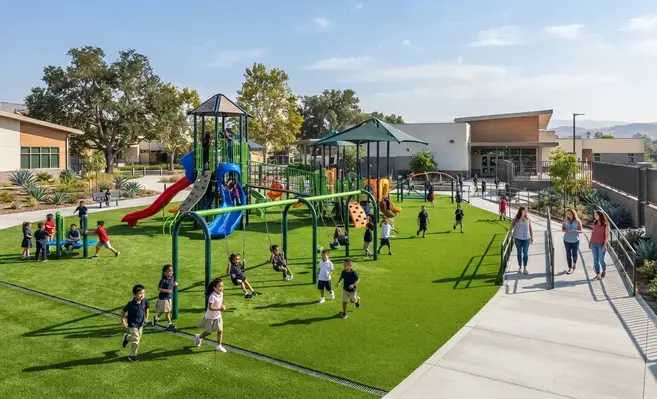
Every playground has different performance requirements. Professionally engineered turf systems are customized for schools, parks, HOAs, childcare centers, and residential backyards to deliver lasting safety, drainage, and durability.
Playground Equipment That Works Best With Artificial Turf
Artificial playground turf is engineered to support a wide range of equipment commonly installed across Inland Empire schools, parks, HOAs, childcare centers, and commercial properties. When paired with the correct shock pad system and base construction, turf provides safer landings, cleaner play zones, and long‑lasting durability even under heavy daily use. Below are the equipment types that benefit most from professionally installed playground turf throughout Riverside, San Bernardino, Rancho Cucamonga, Ontario, Corona, and surrounding communities.
Swing Sets
Swings create some of the highest‑impact zones on any playground. Turf systems with engineered fall protection prevent erosion, eliminate bare dirt patches, and provide a soft, predictable landing surface. Schools in Riverside and Ontario often choose turf specifically to reduce maintenance beneath high‑traffic swing bays.
Slides
Slide exits are notorious for erosion and compacted soil. Artificial turf prevents rutting, keeps the landing zone clean, and offers smoother, safer transitions for children. Inland Empire parks frequently upgrade slide areas to turf to eliminate mud and reduce cleanup after rain or irrigation.
Monkey Bars & Overhead Climbers
Overhead equipment requires impact‑rated surfacing that stays consistent even under repeated landings. Turf with the correct shock pad thickness provides reliable fall protection and reduces the risk of injury. This is especially important for high‑use school playgrounds in Rancho Cucamonga and San Bernardino.
Jungle Gyms & Modular Play Structures
Multi‑level structures create varied fall zones and heavy foot traffic. Turf provides uniform cushioning across the entire play area, preventing uneven surfaces and eliminating the maintenance headaches associated with wood chips or rubber mulch.
Climbing Walls & Vertical Play Features
Taller equipment requires higher fall‑height systems. Turf paired with thick, impact‑absorbing pads ensures compliance with ASTM safety standards while maintaining a clean, attractive appearance. Inland Empire schools often choose turf for climbing zones to reduce long‑term liability and improve safety.
Balance Beams, Stepping Stones & Sensory Paths
Balance features require stable, predictable footing. Turf prevents shifting, eliminates loose-fill materials, and creates a smooth, supportive surface for coordination-based activities. This is ideal for early‑learning centers and inclusive play environments throughout the region.
When paired with the correct base, drainage system, and shock pad configuration, artificial playground turf enhances safety, reduces maintenance, and improves the overall play experience for Inland Empire communities. Whether your playground includes swings, slides, climbers, or balance features, a professionally engineered turf system ensures long-term durability and dependable performance for schools, parks, HOAs, and childcare facilities.
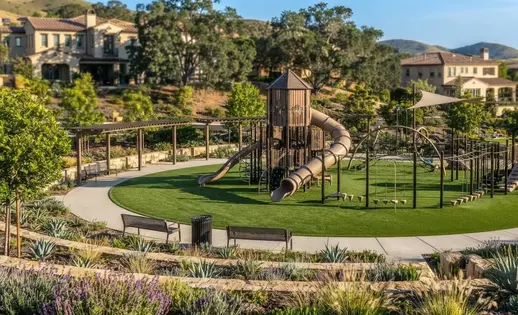
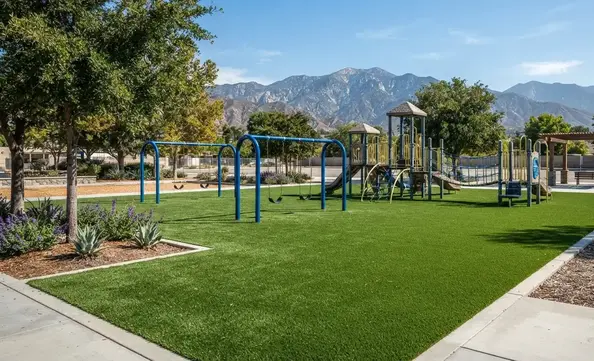
Artificial playground turf creates a clean, cushioned landing surface beneath swings, slides, climbing structures, and other high-use playground equipment.
Playground Turf Applications We Specialize In
Every playground serves a different purpose, which means every artificial turf system should be engineered differently. We design custom playground surfacing solutions for residential families, schools, municipalities, commercial properties, and recreational facilities throughout the Inland Empire.
Residential Backyard Playgrounds
Safe, low-maintenance synthetic grass for swing sets, jungle gyms, trampolines, tree houses, and backyard play areas that stay green year-round without mud or bare spots.
Elementary School Playgrounds
Commercial-grade playground turf designed for heavy recess traffic, impact protection, ADA accessibility, and long-term durability for public and private schools.
Preschool Playgrounds
Extra-soft playground turf systems designed specifically for toddlers and young children with enhanced cushioning beneath age-appropriate equipment.
Daycare Playground Turf
Safe outdoor play surfaces for childcare centers featuring excellent drainage, reduced maintenance, and clean surfaces that stay usable throughout the year.
Church Playground Installations
Artificial turf playgrounds for churches, ministries, Sunday schools, and family activity centers designed for safety and long-lasting performance.
HOA Playground Turf
Attractive community playground surfaces that improve neighborhood amenities while lowering irrigation costs, maintenance, and landscape upkeep.
Apartment Playground Turf
Durable artificial turf for apartment complexes, condominiums, and multifamily housing developments with excellent wear resistance and consistent appearance.
Municipal Park Playgrounds
High-performance synthetic grass systems for city parks, recreation departments, public playgrounds, and community gathering spaces.
ADA Accessible Playgrounds
Stable, wheelchair-friendly playground surfacing that promotes accessibility while supporting inclusive outdoor recreation for children of all abilities.
Splash Pad Turf
Fast-draining synthetic turf surrounding splash pads and water play features that helps minimize puddles while creating comfortable walking surfaces.
Inclusive Playgrounds
Playground turf systems engineered to support inclusive play environments where children of every physical ability can safely enjoy outdoor recreation together.
Community Recreation Areas
Multi-purpose recreation turf for neighborhood parks, youth activity centers, outdoor fitness zones, and family gathering spaces designed for year-round use.
From residential backyard playgrounds to large municipal park projects, our engineered playground turf systems provide impact absorption, dependable drainage, long-term durability, ADA accessibility, and a cleaner play environment throughout the Inland Empire.
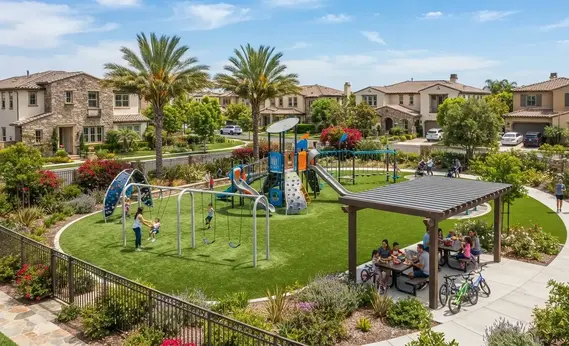
Engineered playground turf creates attractive community amenities that remain clean, durable, and welcoming throughout the year with minimal maintenance.
Building a New Playground vs Retrofitting an Existing Playground
Artificial playground turf performs exceptionally well in both new construction projects and retrofit installations across the Inland Empire. Schools, HOAs, churches, parks, and childcare centers in Riverside, San Bernardino, Rancho Cucamonga, Ontario, Corona, and surrounding communities often choose turf because it dramatically improves safety, drainage, appearance, and maintenance. Whether you are designing a brand‑new playground or upgrading an aging one, the approach determines how much flexibility, customization, and long‑term value you can achieve.
New Playground Construction
New playground builds offer complete design freedom. Turf can be integrated into the layout from the very beginning, allowing precise grading, optimized drainage, and ideal shock pad placement. Schools and parks in growing communities like Eastvale and Ontario Ranch often choose new builds to create modern, ADA‑accessible play environments with seamless transitions, custom graphics, and perfectly engineered fall zones.
Retrofitting Existing Playgrounds
Retrofit installations allow existing equipment to remain in place while outdated surfacing such as wood chips, rubber mulch, or worn‑out grass is replaced with engineered turf. This approach is extremely popular among Inland Empire schools and HOAs because it delivers major improvements in safety, drainage, and appearance without the cost of replacing the entire playground. Retrofitting is ideal for campuses in Riverside, Redlands, and San Bernardino looking to modernize older play areas quickly and efficiently.
Fall Height & Safety Upgrades
Many older playgrounds do not meet current ASTM fall‑height standards. Retrofitting allows shock pads to be added beneath existing equipment, improving impact protection and reducing liability. New builds allow even more flexibility, enabling designers to match pad thickness precisely to each structure’s fall zone from the start.
Drainage Improvements
Older playgrounds often suffer from poor drainage, especially in areas with clay-heavy soils like Fontana and Moreno Valley. Retrofitting allows installers to rebuild the base, correct slopes, and add permeable materials that eliminate puddling and muddy conditions. New builds allow drainage to be engineered perfectly from day one.
Appearance & Cleanliness
Turf instantly transforms worn-out playgrounds, eliminating dirt, dust, wood chips, and debris that children track into classrooms. New builds allow designers to incorporate custom graphics, school logos, hopscotch courts, sensory paths, and color zones. Retrofitting provides a fast, cost-effective way to refresh older campuses and improve curb appeal.
Budget & Project Timeline
Retrofitting is typically more affordable and faster because existing equipment stays in place. New builds require more planning, excavation, and layout work but offer maximum customization and long-term value. Inland Empire schools often choose retrofits for immediate improvements and new builds for major campus upgrades or bond-funded projects.
Whether you are building a brand‑new playground or upgrading an existing one, artificial turf provides a safer, cleaner, and more durable surface for Inland Empire communities. A professional site evaluation ensures your project receives the correct drainage system, shock pad configuration, and turf product selection based on local soil conditions, equipment layout, and daily usage. This approach protects your investment and delivers a modern play environment built for long-term performance.
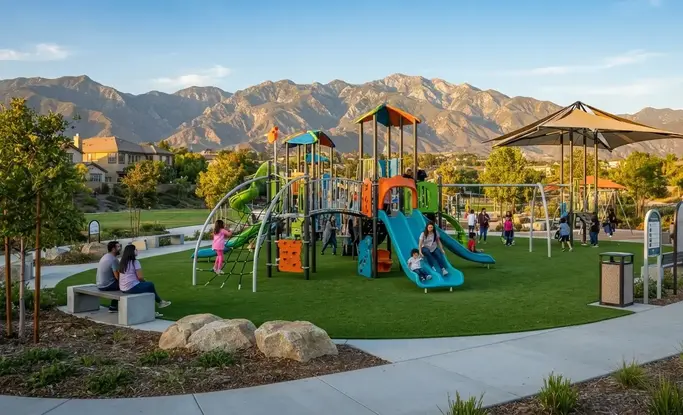
Whether installing turf for a brand-new playground or upgrading an existing one, proper grading, drainage, and engineered construction create a safer play environment built to perform for years.
Playground Artificial Turf Installation Service Area
We install premium playground artificial turf throughout the Inland Empire, building safe, impact-absorbing play surfaces designed for children, schools, HOAs, parks, and residential backyards. Every installation is engineered with proper grading, drainage, and safety-focused base construction to create a soft, consistent surface that helps reduce injuries from slips and falls.
From backyard play areas to large commercial playgrounds, we build turf systems that eliminate mud, reduce maintenance, and provide clean, consistent surfaces for active play. Each project is designed to withstand heavy foot traffic, intense Southern California sun, and year-round use.
- Rancho Cucamonga
- Ontario
- Upland
- Claremont
- Fontana
- Rialto
- Redlands
- Highland
- San Bernardino
- Riverside
- Corona
- Eastvale
- Norco
- Chino
- Chino Hills
- Montclair
- Pomona
- Jurupa Valley
- Beaumont
- Banning
- Yucaipa
- Loma Linda
- Lake Elsinore
- Murrieta
- Temecula
- Menifee
- Moreno Valley
- Perris
- Inland Empire Schools, HOAs, Parks & Residential Playgrounds
If you're planning a playground upgrade anywhere in the Inland Empire, we can evaluate your site conditions, safety requirements, and usage goals to design a custom playground turf system that delivers a safer, cleaner, and longer-lasting play environment for children.
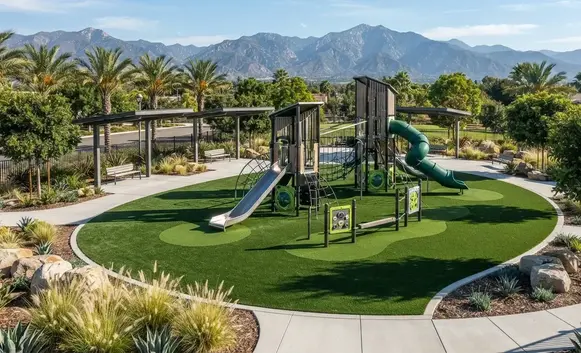
We design and install professionally engineered playground turf systems for schools, parks, HOAs, childcare centers, and residential properties throughout the Inland Empire.
Playground Turf vs Traditional Playground Surfacing
Traditional playground materials each offer certain benefits, but they also create ongoing maintenance challenges that become more noticeable in high‑use Inland Empire environments. Wood chips decompose, attract pests, and migrate outside containment borders. Rubber mulch shifts during active play, creating uneven surfaces that require frequent raking and replenishment. Natural grass struggles to survive beneath heavy foot traffic and quickly turns into compacted dirt or mud, especially in areas beneath swings, slides, and climbing structures. These issues reduce safety, increase labor costs, and shorten the usable life of the playground.
Artificial playground turf solves these problems by combining the appearance of natural grass with engineered drainage, consistent footing, and significantly lower maintenance requirements. With proper care, routine artificial turf maintenance helps preserve appearance and performance for years. Turf fibers remain permanently attached to the backing, which prevents the surface from scattering or shifting during play. This creates a stable, predictable environment that supports safe movement for children of all ages. Because the system is installed over a drainage‑engineered base, water moves through quickly, reducing puddles, mud, and erosion. This is especially valuable in Inland Empire cities where irrigation cycles, summer storms, and clay‑heavy soils often create standing water and unsafe conditions.
Local schools, HOAs, and city parks across Riverside, San Bernardino, Eastvale, and Rancho Cucamonga increasingly choose turf because it delivers long‑term reliability. It stays ADA accessible, maintains consistent impact protection, and eliminates the constant upkeep associated with loose‑fill materials. For homeowners, turf provides a clean, comfortable play surface that blends naturally with the landscape while reducing allergens, dust, and seasonal wear. Whether the project is residential or commercial, turf offers a professional appearance year‑round and a safer, more durable alternative to traditional surfacing.
- No annual mulch replacement
- No muddy bare spots
- Cleaner play environment
- Better drainage after rain
- Lower lifetime maintenance costs
- Professional appearance year‑round
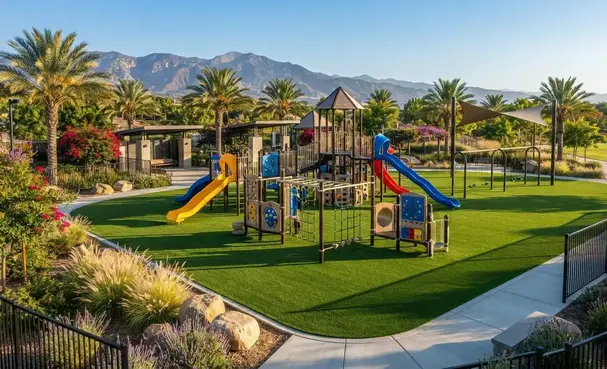
Engineered playground turf provides a cleaner, safer, and more durable alternative to traditional loose-fill surfaces by creating a consistent impact-rated play environment designed for long-term performance.
Benefits of Playground Turf
Playground turf is engineered to solve the most common safety, maintenance, and durability issues found in traditional playground surfaces across the Inland Empire. From schools and HOAs to parks and residential backyards, it creates a cleaner, safer, and more consistent play environment that performs year-round in demanding Southern California conditions.
One of the biggest advantages is safety consistency. Unlike mulch, gravel, or natural grass that shifts, compacts, or wears down unevenly, playground turf maintains a stable surface when properly installed over a compacted base. This helps reduce trip hazards, uneven impact zones, and exposed soil areas that develop under heavy foot traffic.
- Eliminates mud, dust, and erosion in high-traffic play areas
- Prevents loose fill migration from swings, slides, and climbing structures
- Provides more consistent impact absorption when paired with engineered base systems
- Reduces daily maintenance compared to mulch, gravel, or natural grass fields
- Built for Inland Empire heat with UV-stabilized fibers that resist fading and breakdown
- Maintains structural stability under heavy school, HOA, and park traffic
- Keeps school campuses cleaner by reducing tracked-in dirt and debris after recess
- Creates a clean, modern, and professional-looking play environment year-round
- Lowers long-term maintenance costs by eliminating irrigation, mowing, and replacement materials
- Works with engineered drainage systems to prevent puddling and improve post-rain usability
When properly designed and installed, playground turf becomes a long-term infrastructure upgrade rather than a temporary surface improvement. It supports safer play, reduces ongoing maintenance demands, and delivers consistent performance across residential, educational, and municipal environments throughout the Inland Empire. For long-term performance, many schools and HOAs also follow a simple artificial turf maintenance program to keep fibers upright and drainage performing properly.
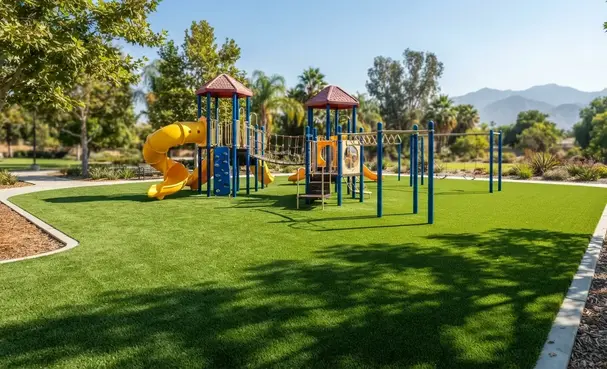
Playground turf creates a cleaner, safer play environment with consistent footing, engineered impact protection, and dramatically lower maintenance than traditional surfacing.
Wondering If Your Playground Meets Today's Safety Standards?
Whether you're replacing mulch, natural grass, or aging playground surfacing, we'll evaluate your site, drainage, fall zones, and base conditions to recommend the safest long-term solution for your property.
Schedule a Free Playground EvaluationUnique Playground Challenges Throughout the Inland Empire
Playground turf that performs well in one part of California may fail in another if it isn't engineered for local conditions. Throughout Riverside County and San Bernardino County, factors like expansive clay soil, intense summer heat, seasonal storms, irrigation demands, and heavy daily use all influence how a playground should be built. Understanding these regional challenges allows us to design turf systems that remain safer, cleaner, and more durable for years to come.
Expansive Clay Soils
Much of the Inland Empire contains dense clay soils that expand when wet and shrink during prolonged dry periods. Without proper excavation and engineered aggregate base construction, these seasonal soil movements can create uneven surfaces, settlement, drainage problems, and premature turf failure. Building a stable foundation is one of the most important parts of every installation.
Intense Summer Heat
Communities including Riverside, Fontana, Ontario, Eastvale, Moreno Valley, and Rancho Cucamonga regularly experience extended periods of extreme summer temperatures. Premium UV-stabilized playground turf helps resist fading and fiber deterioration while maintaining a clean, professional appearance despite years of sun exposure.
Heavy Irrigation & Seasonal Storms
Although Southern California receives relatively little annual rainfall, irrigation systems and occasional heavy storms can quickly expose drainage problems. Proper grading, permeable turf backing, and engineered aggregate bases allow water to move efficiently through the system, reducing puddles, mud, and downtime after rain.
Dust & Santa Ana Winds
Seasonal Santa Ana winds often carry dust and debris across playgrounds throughout the Inland Empire. Unlike loose-fill materials such as mulch or wood chips that scatter easily, professionally installed playground turf remains stable while making routine cleanup much faster and easier.
High Daily Foot Traffic
Schools, daycare centers, churches, HOA playgrounds, and municipal parks experience constant activity throughout the year. These high-use environments require stronger turf fibers, engineered shock padding, reinforced seams, and durable aggregate foundations capable of supporting thousands of children without developing worn paths or unstable footing.
Drainage Around Existing Playgrounds
Many older playgrounds were originally built using natural grass or loose-fill surfacing without proper drainage planning. Retrofitting these areas often requires correcting slopes, rebuilding the aggregate base, and improving water movement before new playground turf can be installed successfully.
Why Local Experience Makes a Difference
Every city throughout the Inland Empire presents slightly different installation challenges. Older neighborhoods in Riverside may require correcting decades of settling and irrigation issues, while rapidly growing communities like Eastvale and Ontario Ranch often involve newly developed lots with compacted construction soils. Foothill communities near Rancho Cucamonga and Upland can introduce steeper grades and more complex drainage patterns, while areas around Moreno Valley and Perris frequently experience expansive clay soils that demand additional base preparation.
Understanding these regional differences allows every playground turf system to be engineered for its specific environment rather than using a one-size-fits-all installation approach. The result is a safer play surface, improved drainage, longer system lifespan, and fewer maintenance issues throughout the life of the playground.
Playground turf is only as reliable as the engineering beneath it. Designing for Inland Empire soil conditions, climate, and long-term usage helps ensure every installation remains safe, attractive, and durable for many years.
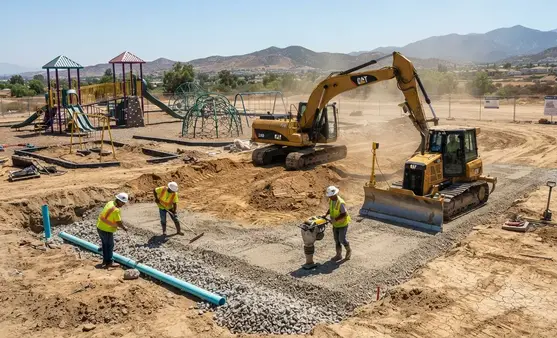
Every long-lasting playground begins beneath the turf with proper excavation, engineered grading, drainage, and compacted aggregate base construction.
Real Playground Turf Installations Across the Inland Empire
Every playground presents unique challenges, from clay-heavy soil and poor drainage to outdated safety surfacing and heavy daily use. These examples demonstrate how professionally engineered playground turf systems create safer, cleaner, and longer-lasting play environments throughout the Inland Empire.
Riverside, CA Elementary School Playground Upgrade
Years of heavy recess traffic had worn away the natural grass beneath playground equipment, leaving compacted dirt, exposed roots, muddy areas after irrigation, and growing maintenance costs.
- Removed worn turf and unstable soil
- Installed engineered aggregate base with precision compaction
- Added impact-rated playground shock pad system
- Improved drainage throughout the playground
Result: A safer, ADA-friendly playground that stays clean year-round while dramatically reducing maintenance requirements.
Rancho Cucamonga Backyard Playground Installation
A family wanted to replace patchy grass beneath their playset where children frequently tracked mud into the home and uneven ground created trip hazards.
- Removed damaged lawn and irrigation issues
- Regraded the backyard using proper drainage engineering
- Installed cushioned playground turf beneath the playset
- Used premium UV-stabilized playground turf fibers
Result: The family gained a cleaner, safer backyard where children can play throughout the year without mud or bare spots.
Eastvale HOA Community Playground Renovation
Loose-fill mulch constantly migrated outside the playground borders, requiring continual replenishment while creating uneven fall protection around equipment.
- Removed aging mulch system
- Installed engineered drainage base
- Integrated ASTM-compliant shock padding
- Installed commercial-grade playground turf
Result: Maintenance costs dropped significantly while residents gained a cleaner, more attractive community playground that remains usable after rain.
Ontario Daycare Playground Safety Upgrade
The daycare wanted a cleaner surface for toddlers while improving fall protection beneath climbing equipment and reducing the amount of dirt tracked indoors.
- Removed worn natural grass and compacted soil
- Installed impact-absorbing playground padding
- Engineered a rapid-drainage base system
- Installed low-maintenance playground turf designed for daily childcare use
Result: Children enjoy a cleaner, softer play environment while staff spend less time cleaning dirt and maintaining outdoor surfaces.
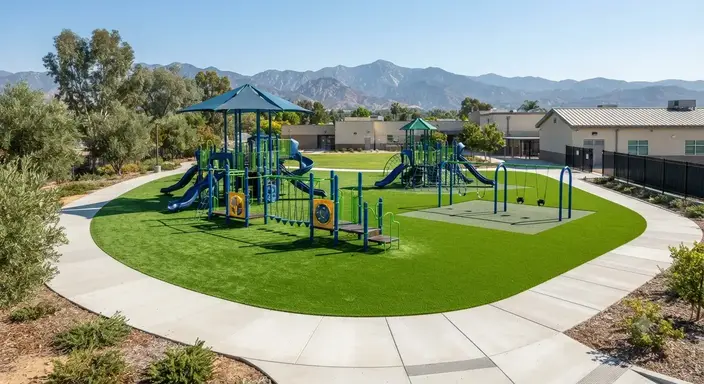
Professionally engineered playground turf systems provide dependable safety, cleaner surfaces, and long-term durability for schools, parks, HOAs, and daycare facilities.
Planning a New Playground or Renovation Project?
From residential playsets to large municipal parks, we'll help design a playground turf system engineered for your layout, safety requirements, drainage needs, and expected traffic levels.
Talk With a Playground Turf SpecialistWhy Inland Empire Families, Schools & HOAs Choose Us for Playground Turf Installation
Installing playground turf requires far more than laying synthetic grass. A safe playground begins beneath the surface with engineered excavation, proper drainage, impact protection, and precise base construction. Every system we build is designed to provide long-term safety, durability, and reliable performance for the unique soil and climate conditions found throughout the Inland Empire.
We Engineer the Foundation First
The long-term performance of any playground depends on its base. We properly excavate, compact, and build engineered aggregate foundations that prevent settling, eliminate soft spots, and support years of heavy foot traffic.
Safety Is Built Into Every Layer
Playground systems are designed around impact protection, not appearance alone. We install appropriate shock pad systems, engineered fall zones, and stable surfaces that help create safer play environments for children of all ages.
Drainage Designed for Inland Empire Soils
Clay-heavy soils and uneven grading can create standing water beneath playgrounds. Our drainage systems move water efficiently through the base, helping eliminate puddles, mud, and erosion after rain or irrigation.
Built for Residential & Commercial Playgrounds
From backyard playsets and daycare centers to schools, parks, churches, and HOA playgrounds, every installation is customized for expected traffic levels, equipment layout, drainage needs, and long-term durability.
Precision Installation From Start to Finish
Every seam, edge, transition, and grade is installed with accuracy to create a clean, professional appearance while minimizing future maintenance and maximizing system longevity.
Local Experience Matters
We understand the heat, soil conditions, drainage challenges, and year-round usage common throughout Riverside, Rancho Cucamonga, Ontario, Corona, Fontana, San Bernardino, and communities across the Inland Empire. That local knowledge helps us build playground turf systems designed to perform for years.
Precision installation details, including seamless joints, engineered edging, and proper base preparation, help create safer, longer lasting playground surfaces.
Playground Turf Installation Pricing in the Inland Empire: What Schools, HOAs & Homeowners Should Expect
Every playground turf installation is engineered differently, which means pricing is based on far more than just square footage. Impact attenuation requirements, fall-height safety ratings, base preparation, drainage conditions, access for equipment, existing surface removal, edging systems, and turf padding thickness all directly affect the total investment. Two playgrounds that look similar on the surface can require completely different safety systems underneath.
We evaluate each site and build a precise estimate based on safety compliance, durability requirements, and the engineered base system needed to create a soft, clean, and long-lasting play surface.
Typical Playground Turf Investment Ranges
Small Residential Play Areas
$3,500 – $9,500+
Ideal for backyard playsets, small swing sets, compact play zones, or replacing patchy grass with a safer padded turf surface designed for everyday family use.
Standard Backyard Playground Systems
$7,500 – $18,500+
Perfect for most residential playground setups including full playset zones, perimeter fall protection, moderate grading, and integrated drainage improvements for clean year-round use.
School & Daycare Playground Installations
$15,000 – $45,000+
Designed for high-traffic environments requiring IPEMA-rated safety systems, thick impact padding, ADA-conscious transitions, and durable turf built for constant daily use.
Parks & HOA Community Play Areas
$25,000 – $75,000+
Large-scale installations for community parks and HOA amenities featuring multi-zone play surfaces, walking paths, seating integration, and engineered drainage for public use durability.
Projects Requiring Full Safety Base & Drainage Engineering
Varies by Site Conditions
Sites with uneven grading, poor drainage, compacted soils, erosion issues, or fall-height compliance requirements require full excavation, aggregate base systems, shock-absorbing pad installation, and precision slope correction before turf is installed.
Custom Engineered Playground Environments
Custom Quote
Fully customized play environments combining playground turf with shaded structures, rubber transitions, sensory play zones, climbing areas, seating spaces, and landscape integration for schools, parks, and high-end residential designs.
Why Playground Turf Pricing Varies From Site to Site
No two playgrounds in the Inland Empire cost the same because every site has different safety requirements, soil conditions, drainage challenges, and equipment layouts. Pricing is based on engineered performance, not just square footage. The goal is to build a system that meets ASTM safety standards, handles local soil conditions, and performs reliably under daily use.
These are the most important factors that influence project cost across Riverside, San Bernardino, Rancho Cucamonga, Ontario, Corona, and surrounding communities:
-
Fall Height Requirements Under Swings and Climbers
Taller equipment requires thicker shock pads and deeper base preparation. A playground with multiple climbers or high impact zones will cost more than a simple flat play area. Schools often underestimate how much fall height compliance affects pricing until a professional evaluation is completed. -
Drainage and Soil Conditions (Clay, Slope, Runoff)
Inland Empire soil varies dramatically from city to city. Areas with dense clay or poor slope require additional grading, permeable base materials, or drainage channels. Proper drainage prevents odors, soft spots, and premature wear, and it is one of the biggest cost variables in older campuses. -
Shock Pad Thickness and ASTM Safety Compliance
Shock pads are engineered to match specific fall heights. A playground with taller structures or multiple fall zones requires thicker pads, which increases material and labor costs. Compliance is essential for schools, HOAs, and childcare centers, making this a critical pricing factor. -
Equipment Access and Site Preparation Complexity
Some Inland Empire campuses have tight access points, locked gates, or long travel paths from parking areas. Limited access increases labor time and equipment needs. Sites with uneven terrain or old foundations may require additional preparation before turf installation can begin. -
Removal of Mulch, Rubber, or Existing Surfacing
Old wood chips, rubber mulch, poured in place rubber, or failing turf must be removed before new materials can be installed. Disposal, hauling, and base reconstruction add cost but ensure the new system performs safely and consistently. -
Equipment Layout and Play Zone Design
Complex playgrounds with multiple structures, curved borders, or tight spacing require more precise installation and additional safety padding. Simple rectangular areas cost less, while intricate layouts increase labor and material needs. -
Turf Product Selection and Performance Level
Certified playground turf comes in different fiber densities, pile heights, and backing systems. Higher performance products cost more but offer better durability, cooler surface temperatures, and longer warranties. These upgrades are ideal for high traffic Inland Empire campuses.
A professional site evaluation ensures your playground receives the correct safety system without paying for unnecessary upgrades. By assessing soil conditions, drainage needs, equipment layout, and fall height requirements, you receive accurate pricing tailored to your specific Inland Empire location and a safer, longer lasting playground built for everyday use.
Every playground is custom engineered around its equipment layout, safety requirements, drainage design, fall-height protection, and expected traffic, creating a durable surface built for years of reliable performance.
Ready for an Accurate Playground Turf Estimate?
Every playground is engineered differently. We'll evaluate your site, equipment, drainage, and safety requirements to provide a detailed estimate with no guesswork and no hidden surprises.
Request Your Free EstimateWhy Choose Inland Empire Turf for Playground Turf Installation
Playground turf only performs correctly when the entire system beneath it is engineered for safety, impact absorption, and drainage. The turf you see is just the surface layer, the real protection comes from the base construction, shock attenuation system, and grading underneath. Inland Empire Turf builds playground systems designed specifically for schools, HOAs, and residential yards across the Inland Empire, where heat, clay soil, and heavy daily use demand more than basic landscaping.
Safety-Focused Playground Design
Every playground surface is engineered around fall zones, equipment height, and real-world impact conditions to reduce injury risk and meet safety expectations for residential and commercial use.
Precision Grading for Safe, Even Play Areas
We shape the base to eliminate trip hazards, control slope direction, and ensure smooth transitions between play equipment, walkways, and surrounding landscape areas.
Engineered Base Systems That Prevent Settling
Inland Empire clay soil expands and shifts with moisture. Our compacted multi-layer base prevents soft spots, dips, and uneven surfaces over time, even under heavy daily use.
Shock Pad Systems for Impact Protection
Where required, we install engineered shock pads beneath turf to absorb impact and help meet ASTM fall height safety guidelines for playground equipment.
Drainage Systems Built for Rain and Water Play
Our drainage design prevents puddling, mud, and surface breakdown by moving water efficiently through the base, keeping playgrounds usable after storms and irrigation.
Built for Schools, HOAs, and High-Traffic Use
Designed for constant daily activity, our playground systems handle recess, PE classes, and community use without breaking down or developing unsafe wear patterns.
UV-Stable Materials for Inland Empire Heat
Triple-digit summers require heat-resistant turf fibers and infill systems that maintain performance, color stability, and surface safety in extreme sun exposure.
Installation Quality That Prioritizes Safety
Seam placement, edge restraints, and transitions are installed with precision to eliminate trip hazards and ensure long-term durability in high-use environments.
Designed to Fit Real Outdoor Spaces
We integrate playground turf with existing yards, patios, and landscape features to create clean, functional spaces that work naturally with your property layout.
Inland Empire Turf builds playground systems that go beyond appearance, focusing on safety, drainage, durability, and long-term performance for families, schools, and communities across the Inland Empire.
How Long Does Playground Turf Last?
Premium playground turf is engineered for long-term performance, especially in high‑traffic Inland Empire environments. Schools, HOAs, parks, and childcare centers in Riverside, San Bernardino, Rancho Cucamonga, Ontario, Corona, and surrounding communities typically see 10 to 20 years of reliable service when the system is installed correctly and maintained with care. The lifespan depends on usage levels, UV exposure, drainage quality, and the materials selected during installation.
Daily Foot Traffic
Commercial playgrounds experience significantly more activity than residential yards. Recess, PE classes, after‑school programs, and weekend community use all contribute to wear. High‑quality turf fibers and durable backing systems ensure the surface stays stable and attractive even under constant foot traffic.
Inland Empire UV Exposure
Cities like Riverside, Fontana, and Moreno Valley experience intense sunlight and prolonged heat. UV‑stabilized turf fibers resist fading, brittleness, and premature breakdown, allowing the surface to maintain its color and performance for many years despite harsh summer conditions.
Shock Pad & Base Quality
The longevity of playground turf depends heavily on what is beneath it. A properly compacted aggregate base and high‑quality shock pads protect the turf from shifting, settling, and impact damage. When the subsurface is engineered correctly, the entire system lasts longer and performs more consistently.
Drainage Performance
Efficient drainage prevents water from becoming trapped beneath the turf, which can weaken adhesives, create odors, and accelerate wear. Playgrounds with permeable backing and engineered bases dry faster and maintain structural integrity over time, especially in areas with heavy irrigation or splash play features.
Installation Quality
The difference between a 10‑year system and a 20‑year system often comes down to installation. Proper seam work, accurate grading, correct pad thickness, and secure edging all contribute to long-term durability. Inland Empire schools that invest in professional installation see significantly longer service life than those using low-cost landscape contractors.
Routine Maintenance
Playground turf requires minimal upkeep, but simple maintenance such as debris removal, infill leveling, and occasional rinsing helps preserve fiber structure and surface consistency. Facilities that follow a basic maintenance schedule enjoy better performance and longer lifespan.
When installed correctly and maintained with care, playground turf provides a long-lasting, safe, and visually appealing surface for Inland Empire schools and communities. A professional evaluation ensures your project receives the right materials, drainage system, and shock pad configuration to maximize lifespan and protect your investment for many years to come.
Premium playground turf maintains its appearance and performance through years of heavy daily use when supported by a properly engineered foundation.
Designing a Playground That Grows With Your Family
A well designed playground turf installation should evolve as your children grow. In the Inland Empire, where outdoor living is part of everyday life, families often repurpose their play areas over time. Planning ahead ensures the space remains safe, functional, and enjoyable through every stage of childhood and into the teenage years.
Early Childhood Play Zones
Soft, forgiving surfaces support early motor development and safe exploration. Turf stays clean, cushioned, and mud‑free, creating a dependable environment for toddlers learning to walk, climb, and play.
Growing Kids & Active Play
As children become more active, the same space often shifts toward running games, ball play, and backyard adventures. Premium turf prevents ruts, bare spots, and uneven ground, even under heavy Inland Empire foot traffic.
Youth Sports Practice Areas
Many families repurpose playground zones into sports warm‑up areas for soccer, baseball, cheer, or fitness. Turf provides consistent footing, fast drainage, and a durable surface that supports year‑round training.
Teen Fitness & Recreation
As kids grow older, the space may transition into a workout zone, yoga area, or general recreation space. Turf remains stable, comfortable, and visually appealing, making it ideal for evolving backyard lifestyles.
Engineered for Long-Term Use
Planning for future activities during installation maximizes long‑term value. Drainage, base construction, and turf density are selected based on your yard’s microclimate, from Redlands shade patterns to Rancho Cucamonga summer heat.
A Space That Grows With You
When designed correctly, playground turf becomes a multi‑purpose outdoor surface that adapts to your family’s changing needs. It stays clean, safe, and beautiful through every season and every stage of life.
Thoughtful planning ensures your playground turf remains functional, safe, and enjoyable as your family’s needs evolve over the years.
Why Professional Base Preparation Matters More Than the Turf Itself
High quality playground turf performance depends on the foundation beneath it. Even premium synthetic grass will fail if the base is not engineered correctly. Proper preparation ensures long term safety, drainage efficiency, and structural stability for residential and commercial playgrounds across the Inland Empire.
Proper Excavation
Every installation begins with removing old materials and establishing a clean, stable starting point. Correct excavation prevents future settling and eliminates hidden soft spots that can compromise safety and create uneven surfaces.
Precision Grading
Grading determines how water moves through the playground. Inland Empire soils vary widely, so slopes are engineered to prevent puddling, erosion, and slow drying after irrigation or storms.
Soil Stabilization
Clay heavy or loose soils require stabilization to prevent shifting over time. Stabilized soil creates a firm, reliable base that supports high foot traffic without developing dips or soft spots.
Aggregate Base Construction
A properly compacted aggregate base creates a strong, uniform foundation. Commercial playgrounds often require thicker bases to support thousands of users each year while maintaining consistent impact protection.
Engineered Shock Pads
Where fall protection is required, shock pads are integrated beneath the turf. These pads improve impact attenuation and help meet ASTM safety standards for playground surfacing without affecting the finished appearance.
Optimized Drainage Systems
Drainage is essential for year round usability. Engineered bases move water quickly through the system, reducing mud, puddles, and downtime after storms or heavy water play.
Investing in professional base preparation creates a safer playground, improves drainage, extends turf lifespan, and reduces long term maintenance costs.
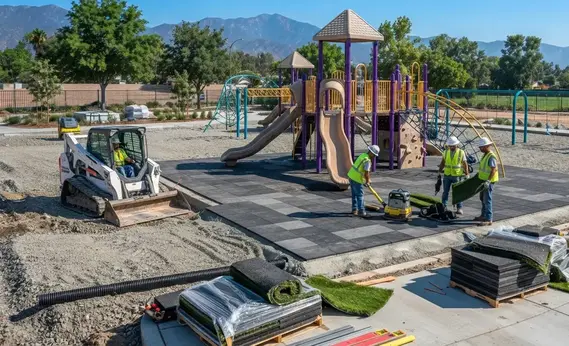
The hidden foundation beneath playground turf is responsible for long-term safety, drainage performance, and structural stability.
Don't Let Hidden Foundation Problems Shorten Your Playground's Life
Proper excavation, drainage, aggregate base construction, and impact protection determine how your playground performs for years to come. Let us evaluate your site before installation begins.
Call (909) 406-7718Common Mistakes When Installing Playground Turf
Many playground turf failures across the Inland Empire happen because installers treat these projects like simple landscaping jobs. Schools, HOAs, parks, and childcare centers in Riverside, San Bernardino, Rancho Cucamonga, Ontario, Corona, and surrounding communities often discover problems only after the surface becomes unsafe or starts breaking down. Understanding these mistakes helps protect your investment and ensures your playground meets local safety and performance standards.
Skipping Proper Excavation
Inland Empire soil often includes clay and hardpan layers. When contractors remove only a shallow layer of soil, the turf base shifts, drains poorly, and fails prematurely. Proper excavation is the foundation of a safe, long-lasting playground surface.
Poor Drainage Design
Schools and parks in Riverside, Eastvale, and Fontana deal with heavy irrigation cycles and occasional storms. Without engineered drainage, water pools beneath the turf, creating odors, bacteria growth, and slippery conditions. Correct grading and permeable base materials prevent these issues and keep the surface usable year-round.
Insufficient Base Depth
Playground turf requires a deeper, more compacted base than residential turf. Too little base material leads to soft spots, uneven footing, and unsafe conditions under swings, slides, and climbing structures. A properly engineered base ensures stability even under heavy daily use.
Incorrect Shock Pad Thickness
Fall height requirements vary by equipment. Using the wrong pad thickness puts schools and parks at risk of failing ASTM safety standards. We frequently see installations in Rancho Cucamonga, Redlands, and Ontario Ranch where pads do not match equipment height, creating serious liability concerns.
Improper Seam Construction
Inland Empire heat can cause seams to expand and fail if installed incorrectly. Poor seam work leads to visible gaps, tripping hazards, and premature wear. Professional seam construction is essential for both safety and long-term durability.
Ignoring Equipment Fall Heights
Every playground structure has a required fall zone and fall height rating. Many installers overlook these measurements, leaving critical areas under-protected. This is one of the most common issues corrected for schools in San Bernardino, Corona, and Ontario Ranch.
Using Landscape Turf Instead of Playground Turf
Landscape turf is not designed for impact absorption, heavy foot traffic, or safety compliance. It breaks down faster, gets hotter, and fails fall protection tests. Only certified playground turf should be used beneath equipment to ensure safety and long-term performance.
Avoiding these mistakes is essential for any Inland Empire school, HOA, or childcare facility investing in playground turf. A properly engineered system protects children, reduces long-term maintenance costs, and ensures compliance with ASTM and ADA standards. Local experience matters, especially in a region with intense heat, clay soils, and high daily foot traffic. Partnering with a team familiar with Inland Empire soil conditions, drainage patterns, and safety requirements ensures your playground performs safely and reliably for years.
Playground Turf Maintenance Guide
- Debris Removal: Remove leaves, twigs, and litter weekly using a plastic rake or leaf blower to prevent organic buildup.
- Regular Rinsing: Wash down high-use zones monthly with clean water to clear away dust, pollen, and light spills.
- Fiber Brushing: Brush turf fibers upright quarterly with a synthetic bristle broom to counteract matting from heavy foot traffic.
- Seam Inspection: Examine all seams and perimeter edges bi-annually to identify and repair any loose sections before they cause tripping hazards.
- Drainage Clearing: Check and clear surrounding drainage outlets before heavy rain seasons to guarantee continuous, rapid water runoff.
- Surface Sanitization: Apply a playground-safe, non-toxic disinfectant treatment monthly at schools and daycares to eliminate germs and bacteria.
- Temperature Management: Spray the turf with a mist of water on exceptionally hot days to quickly lower the surface temperature for children.
- Stain & Gum Care: Treat tough stains or embedded chewing gum immediately using specialized turf cleaners or ice packs to harden and scrape away debris safely.
Unlike traditional safety surfacing like mulch, wood chips, or natural grass, premium playground synthetic turf requires very little long-term maintenance. It eliminates mud, prevents deep ruts under swings, and maintains a consistently clean, vibrant, and ADA-compliant safety appearance throughout every season of the year.
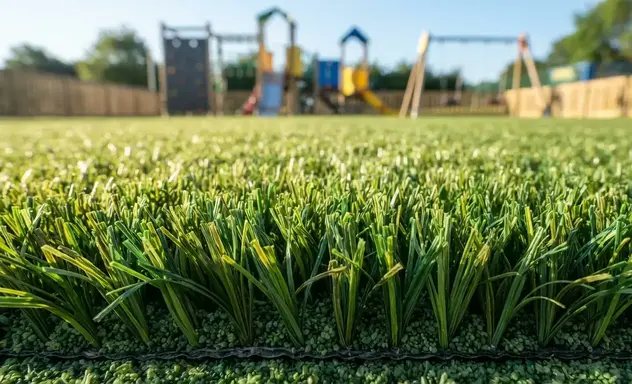
Routine brushing and occasional rinsing keep premium playground turf clean, attractive, and ready for daily use with minimal maintenance.
Playground Turf Installation FAQs
- Is playground turf safe for children in residential and commercial settings?
- Yes. Properly installed playground turf is engineered with impact absorption, stable base construction, and slip-resistant fibers to reduce injury risk during falls. It provides a safer alternative to mulch, gravel, or bare soil for homes, schools, and daycare environments.
- What makes playground turf safer than wood chips or rubber mulch?
- Unlike loose-fill materials that shift, compact, or wash away, playground turf provides a consistent surface. When paired with an engineered base or shock pad, it delivers reliable impact reduction across the entire play area without constant replenishment.
- Does playground turf meet fall height safety requirements?
- Yes, when installed with the correct underlayment system. Shock pads and engineered base layers can be designed to meet specific fall height ratings depending on playground equipment and site requirements.
- How does playground turf handle drainage after rain or water play?
- Playground turf uses permeable backing and a compacted aggregate base that allows water to drain quickly. This prevents puddles, mud, and slippery conditions so the area can be used shortly after rain or water activities.
- Can playground turf reduce injuries from falls?
- Yes. While no surface eliminates all risk, properly engineered turf systems significantly reduce impact severity by combining cushioning fibers with shock-absorbing base layers.
- Is playground turf safe for barefoot play in hot Inland Empire summers?
- Yes. Modern turf is designed with UV-stable fibers and heat-reducing materials that perform better than concrete or rubber surfaces in hot conditions. Some warmth is expected in direct sun, but it remains more comfortable than hardscape.
- Can playground turf be installed on sloped or uneven yards?
- Yes. Most installations include grading and reshaping to create a safe, level play surface. Engineered slopes can also be incorporated for drainage without compromising usability.
- How long does playground turf last in high-use areas?
- High-quality playground turf typically lasts 10–20 years depending on usage, sun exposure, and installation quality. Proper base construction plays a major role in long-term durability.
- What maintenance does playground turf require?
- Minimal maintenance is required. Occasional rinsing removes dust and debris, and light brushing keeps fibers upright. There is no mowing, watering, or fertilizing needed.
- Can playground turf be installed in schools, HOAs, or daycare centers?
- Yes. It is commonly installed in residential homes, schools, HOAs, parks, and daycare facilities due to its safety, cleanliness, and low maintenance requirements.
- Can you add custom play zones or markings into playground turf?
- Yes. Turf systems can include color zones, game markings, activity areas, and multi-zone layouts designed for structured or free play environments.
- Will playground turf make my backyard easier to maintain?
- Yes. It eliminates mowing, mud, dirt tracking, and patchy grass issues, creating a clean and consistent play surface year-round.
- How do I get an accurate estimate for playground turf installation?
- Estimates depend on area size, drainage conditions, equipment type, fall height requirements, and whether shock padding is needed. Each project is custom designed for safety and performance.
- Do you install shock pads under playground turf?
- Yes, when required. Shock pads are added beneath turf in higher fall-height areas to improve impact absorption and meet safety standards for playground equipment.
- Why choose professional installation instead of DIY playground turf?
- Professional installation ensures proper grading, drainage, compaction, and safety compliance. DIY installs often fail due to uneven bases, poor drainage, or lack of impact-rated underlayment.
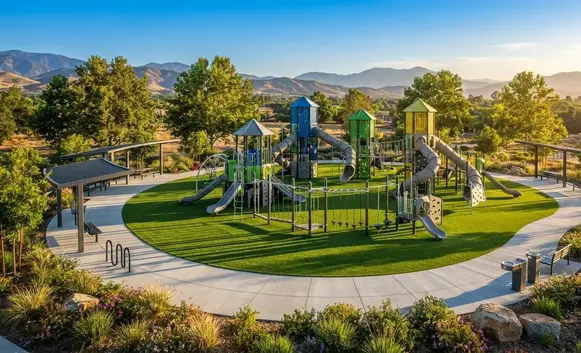
A professionally engineered playground turf system delivers years of safer play, lower maintenance, superior drainage, and a clean, attractive outdoor environment for schools, parks, HOAs, and families throughout the Inland Empire.
Ready to Build a Safer Backyard Play Space?
Upgrade your play area with a custom-engineered playground turf system designed for impact absorption, safer falls, and year-round durability. Whether you're building a residential backyard play space, upgrading a school or daycare playground, or improving an HOA or community park, we design and install synthetic turf systems built for safety, drainage, and long-term performance in Inland Empire conditions. Schedule your free on-site consultation, safety evaluation, and detailed estimate today.
Call (909) 406-7718